
I get like, 1 call a week where a tech or finance or consulting or banking employee in New York, Los Angeles, or San Francisco who is generally Asian reaches out about my services.
For those who don’t know, I help founders with just an idea. My philosophy isn’t about the perfect product, but the perfect product to get feedback and exposure to strangers. It’s about starting small enough and instilling enough philosophy to realize if this is something you want to spend the next 5-10 years committing to.
Anyways, I keep repeating the same things in the call. People seem to like it. Maybe it’s because my experience in CPG was such a traumatic experience or something. There are a few I’ve convinced out of starting a food business, but those who have enough conviction? I like working with those people.
There are many successful people who transition from high-paying tech/consulting to food, but they generally have an unfair advantage. Consultants and Venture Capitalists specifically can raise money because their network is primed for that. Influencers and celebrities already have a primed target market in which they will buy their stuff if the product aligns with their values.
If you are exhausted from your well-paying job and are looking for greener pastures because AI might lay you off, a food business seems like the perfect solution. How hard can it be? Well, it’s very hard. But I’ll be listing a few primers that might help you decide if this is worth pursuing.
This piece is more philosophical than actionable, but I think it is important. The actionable part comes when you nail down the philosophical.
This is an Asset-based Business
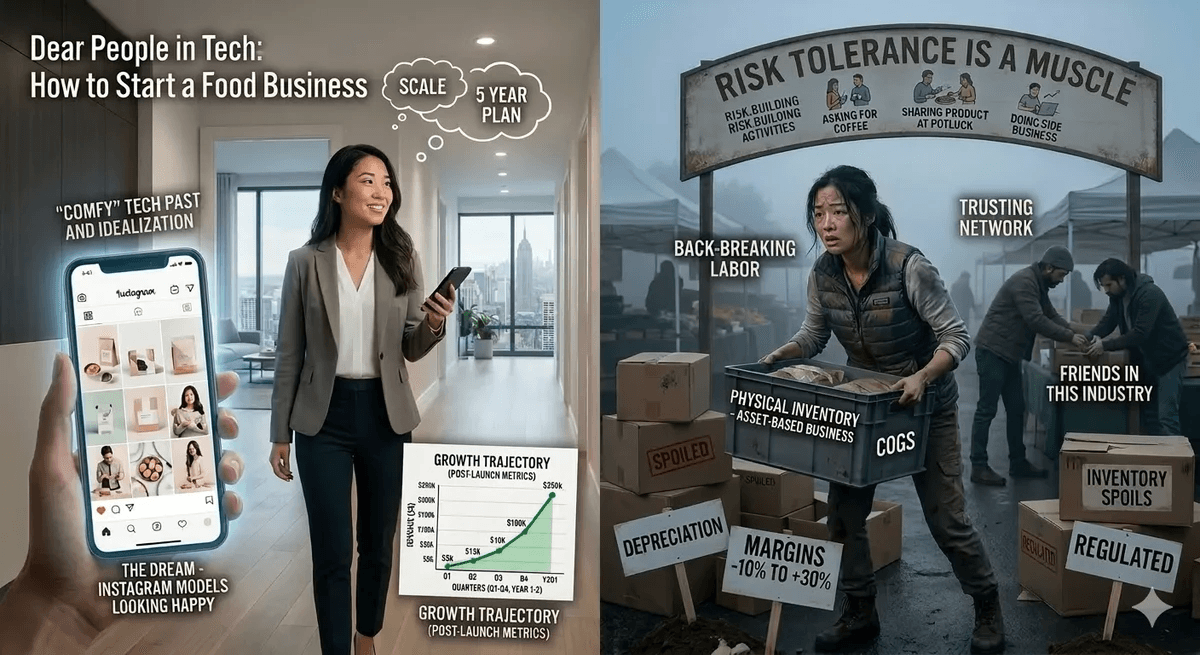
People in tech with a large safety net, managing people and live in a comfy apartment complex selling a digital good and always want more. Life is good, but somehow, you’re miserable. So why not start a food business?
Want to be a founder that has to deal with COGS and depreciation, make negative 10 to positive 30% margins, and spend actual back-breaking labor to make a food product at a farmer’s market?
They dream of Instagram models who are barely making ends meet look happy on camera. They plan intensely on how to scale the business but they plan in a vacuum. Give me a 5 year plan about when they will hit up a contract manufacturer and I’m like girl, do you even like food?
Food is an asset-based business in that to make money, you must sell a physical good. This is all it really boils down to. How can you sell enough volume at a certain price to be rich?
There are many barriers to selling food compared to say, pens or an e-book. Food has to be safe so it is more regulated than other assets. There is a ton of competition which makes it difficult to produce a signal and inventory spoils, which means after a few months or a couple of years, you have to throw everything out. Are you ready to handle that?
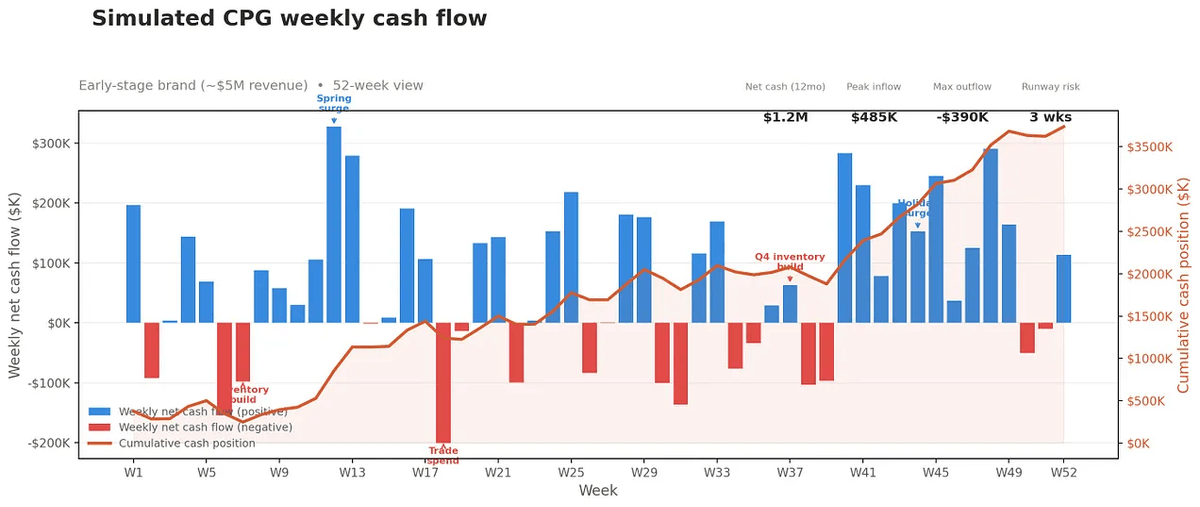
Because it is an asset-based business, you must be prepared to spend a ton of money, not get paid for like, at minimum 60-90 days, and after you make that money back, spend even more to get more inventory. Oh, inventory costs money, distribution costs money, legal, branding, discounting eats margins, blah blah blah. The big thing is, this business destroys the perfect model. Every founder I’ve talked to has experienced this and unfortunately, there’s no perfect playbook on how to handle this. Instead, I always suggest to prospecting founders to build up a risk tolerance.
Risk Tolerance
Risk tolerance is hard to teach. It’s a complex factor where it’s easy to dream but hard to execute. In general, society is built on security and comfort and we’ve been conditioned to havea. less-risky life. A salary is literally a drip-feed of sustenance in your life and it’s hard to reject this.
As someone who’s started their own business multiple times, my current business is the only one where I have to eat what I kill. Sometimes I make $1000 dollars a month, sometimes I make $20,000 dollars a month. Lead times, refunds, and unexpected acceptances are all factors here. This makes me EXTREMELY anxious and makes me hesitant to grow. My other businesses, I was able to partner with someone who could raise money and negotiate a salary based on the money raised.
I started my first business at 25 and I’m now in my mid-thirties. Within that almost-decade of experience, I took a lot of risks and looking back at it, I can’t believe what I did. Risk tolerance gets easier over time. It’s a muscle you have to train over and over again. Just like muscle building, the more you have a baseline of risk tolerance, the easier it is to do big stuff.
You don’t just bench press two plates your first time; you work up to that level. Building risk tolerance includes things like reaching out for coffee to someone more successful than you, spending money on things that don’t convert, selling a product at a demo, and begging your uncle/spouse/spouses’ uncle for startup cash. (if you can’t beg your family for money, will a stranger be better?)
Things that build risk tolerance in a food business
- Asking someone out for coffee platonically (like talking to other founders)
- Selling your demo product at a potluck
- Hosting a dinner party and sharing your product
- Asking your friends/family for money to start a business
- Posting cringe on LinkedIn
- Doing a side business while balancing a full-time job
Things that don’t build risk tolerance (but are still risky)
- Spending money on ads
- Raising VC money
- Manufacturing a product in a factory with no product-market fit
- Quitting your job to start a food business
Founder Philosophy
Most product developers will say the product comes first. I don’t necessarily think that. New business owners say this, but what does this really mean? Does it mean the product tastes soooo good that the customer will be a fan?
As years and years of pain and suffering go by, I see my founder friends age rapidly.
The most valuable free advice I give to people who want to start a food business is to talk with other founders. Not food scientists, founders. Those who endured years of product development just to get it rejected because the branding looked too generic, or the product was too expensive, or it was just not the right timing. Every founder has a different story on when their product gets rejected but also great stories to how their product succeeded so it’s important to understand this.
Below are people who give real advice on food businesses.
- James Richardson - His book Ramping Your Brand is a must-read
- Alison Cayne - by the way, did a podcast episode with her
- Jordan Buckner - same
- Jennifer Barney - oh wow same
Most of these founders/advice givers listed here have survived a food business and are so transparent about how much it sucks. Follow them on LinkedIn, engage with them, and they are influential enough to get other people on board and expand your network.
You should follow but be wary of anyone who’s building their food business in public. It’s all marketing. If they say anything bad about their business, they turn it into marketing judo. This includes me.
Useful Organizations
- Startup CPG
- Naturally Rising
- New Hope Network
Meeting founders and creating a trusting network is probably the most important thing in this business. This business is lonely and heartbreaking. Without friends in this industry, building a business becomes miserable. It does not have to be.
I used to be close with a founder who left her banking job in New York to start a snack business. She would tell me everything. All of the wonders, the regrets, the cofounder breakups and the real ones. In those conversations, there was such a paradox of how tired and hopeless it all seemed but how stubborn and optimistic she was about her brand. I was going through some of my own turmoil in my own CPG business so talking to her was like an anchor to my life at the time. After 7 years, she decided to go back to banking.
I think about her a lot.